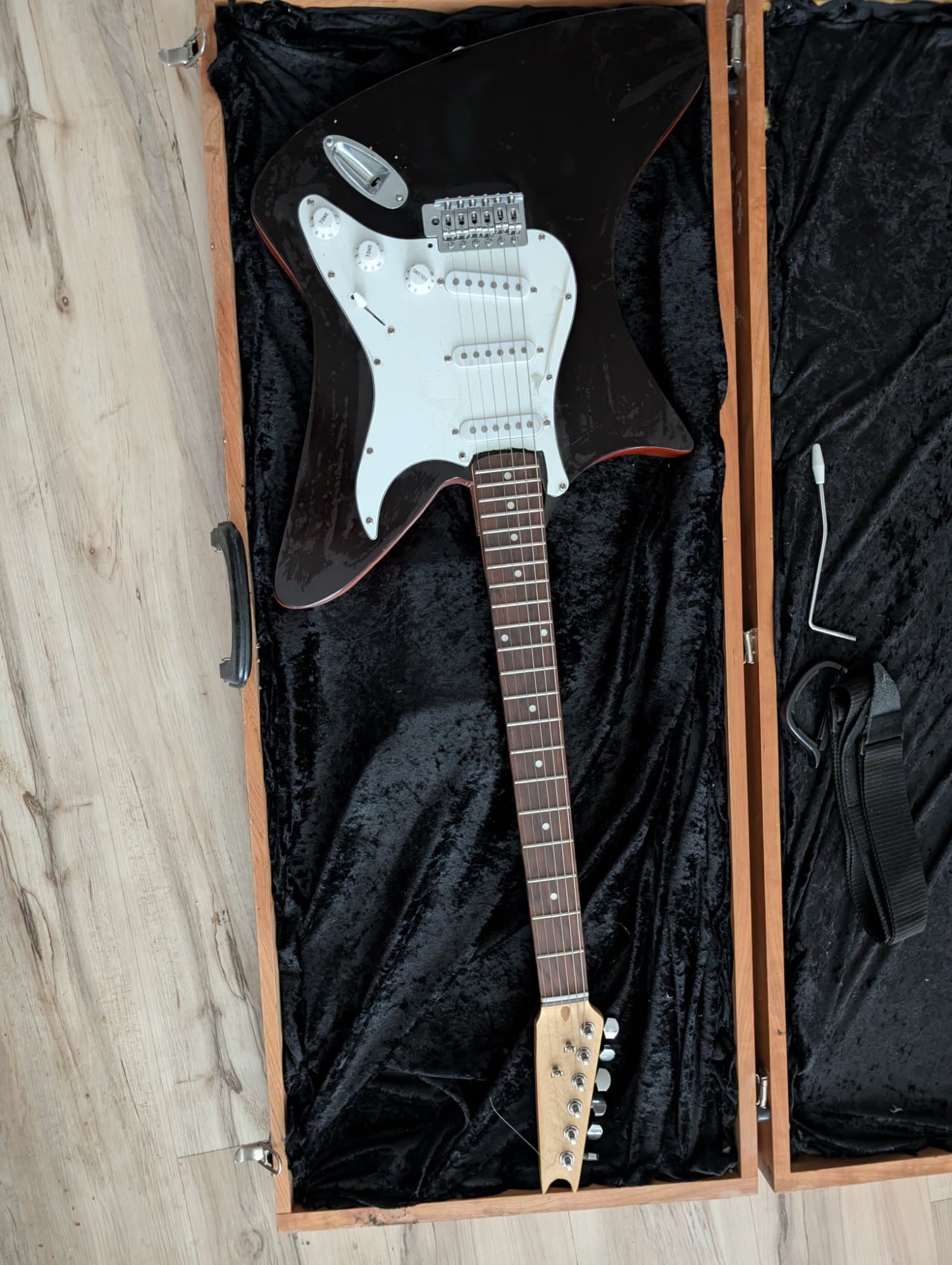
Firebird-inspired body carved from scratch: body, electronics, and custom wood case
A fully playable handbuilt electric guitar with custom case, intonates correctly, plays in tune up the neck, and sounds exactly like a three-single-coil setup should.
Architecture
Data flow from user interface through API layer to persistence and cloud deployment
Body
The body is carved from what appears to be alder the grain visible at the binding edges is tight and slightly figured, consistent with alder's characteristics. The shape is Firebird-inspired: the asymmetric offset waist, the extended lower bout, the swept upper horn. The silhouette was drawn freehand, cut on a bandsaw, and shaped progressively through belt, orbital, and hand sanding. The gloss black finish sits over a red binding routed along the edge for separation between top and sides.
Electronics routing
The pickup cavities and control cavity were routed with a plunge router using a template. The neck pocket, the most precision-critical cut on any guitar, was routed to match the bolt-on maple neck. Electronics are three single-coil pickups wired to a single volume and tone control, with a standard 5-way selector. Synchronized tremolo bridge with whammy bar.
The case
The hardshell case is solid pine, visible from the warm amber tone and the tight knotty grain in the case photos. Constructed with a panel-and-rail method: solid panels fitted into routed channels in the frame rails, similar to traditional door construction. Chrome barrel latches, hinges, and handle hardware. The interior is lined with black crushed velvet cut and fitted to the guitar's contours. Building the case took roughly as long as the guitar body itself, it's a second woodworking project nested inside the first.
Why it matters
Building a guitar from raw wood to playable instrument requires understanding tolerances that have no margin for error, neck pocket alignment, bridge saddle height, nut slot depth. It's a lesson in iterative precision that maps directly to how I approach engineering problems: define the constraint, work methodically, test at every stage, and don't move to the next step until the current one is right.